

David
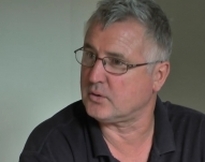
David had a skiing accident in January 2014 and a subsequent X-ray showed that he had torn some ligaments in his shoulder. His GP sent him for physiotherapy and the injury settled down after about three months, but the achy pain continued. He had decompression surgery that went well. But David went back to work two days after surgery and this has meant a longer rehabilitation period.
David is married with four adult children. He owns a small company. Ethnic background: White.
More about me...
David had a skiing accident in January 2014 and a subsequent X-ray showed that he had torn some ligaments in his shoulder. The GP sent him for physiotherapy and the injury settled down after about three months, but the achy pain continued. He went to see an osteopath, but this treatment didn’t stop the pain either.
David was referred to the Nuffield Orthopaedic Centre, an NHS hospital where he had an ultrasound scan and a steroid injection that worked for about two months, but after that the pain continued as before. The pain he felt was an aching pain that on a scale from naught to ten was continuously at four. He went back to the hospital to see the consultant, that after physical examination and detailed questioning, told him he could have decompression surgery to treat the impingement that was causing the pain and restriction in his shoulder.
During the pre-op assessment meeting, the consultant explained everything about the decompression surgery, but David said that the one thing he did not grasp was the length of time it would take to recover from keyhole surgery. He can’t remember if he was told and decided not to listen or, if the explanation wasn’t sufficiently clear enough. Keyhole surgery sounded to him like a little operation that was not going to interfere much with his daily routines. So he went back to work a few days after surgery.
David runs his own company and took only two days off work after his operation, despite his wife’s and family’s disapproval. His job involves physical work like going up and down ladders and carrying materials and equipment. At work, he was taking it easy but he was doing too much for someone that has just had an operation. In hindsight, he realises that he should have taken more time off work because he has only managed to lengthen his recovery period.
Two months after his operation David’s shoulder still aches. At his post-op follow-up appointment, he saw the physiotherapist and they agreed to leave things as they are for a couple of months to see if the pain settles down. Under the guidance of the physiotherapist, David has started going to the gym but he didn’t do the rehabilitation exercises. He thinks that the pain may be linked to a tear in the tendon or ligament. But a scan done before surgery showed no tear. He had decompression surgery under general anesthetic just in case the surgeon needed to repair a ligament or something else.
David looked at the Technology Enhanced Patient Information (TEPI) website four or five times before his operation because he was interested to find out what the actual operation was like. He also showed the website – only the parts that explain the causes of subacromial impingement and surgery - to his wife and teenage kids. He didn’t watch the TEPI site to find information about post-op rehabilitation. He didn’t look at the site after his operation.
Overall, he feels that the care he has got on the NHS has been ‘excellent’ but says that, in this digital era, they could do with giving patients less paperwork and sending more information electronically. Plus, he thinks the NHS could save money by reducing the size of the body wash and nose drop bottles use by patients before surgery.
David didn’t realise that keyhole surgery takes time to recover from. Going back to work too soon slowed his recovery down.
David didn’t realise that keyhole surgery takes time to recover from. Going back to work too soon slowed his recovery down.
So how long did you take off?
Two days. Obviously I was taking it easy but I was doing too much and I, she said that that will prolong the recovery because obviously the bone where they’ve ground it from was inflamed, and it’s got nerves and everything else so it's probably taken me longer to recover than I should have done.
And that’s something that, maybe it was explained to me and I decided in my mind not to listen, or maybe it wasn’t clear enough the amount of time and the recuperation that I should have had after I came out of hospital.
So, you know, I’m not, as I say portion the blame, it’s probably me in my nature, the way I am, if I can work I’ll work, you know. But I think it’s taken longer and it still aches.
David saw the physio and she was very thorough. She showed him more exercises to do and told him which machines he should use or avoid at the gym.
David saw the physio and she was very thorough. She showed him more exercises to do and told him which machines he should use or avoid at the gym.
I saw the physio, yeah, very nice lady, very thorough, and she also showed me some exercises and things to do when I go to the gym. And which exercises to stay away from and which ones to do, like stay off the cross trainer and things like that because it’s moving. And also to set my body before I exercise by putting the shoulders back and, because otherwise muscles compensate when you do the exercise.
So that was very good and, as I say, we’ve, she’s given me a number and we’re going to, if I need to, I’m going to go back in a couple of months. I feel as though it will settle down on its own, but if it doesn’t then I’m going to make an appointment and go back and see her.
Okay, so you have joined the gym?
Yes, I’ve gone, yes I belong to a gym and I’ve gone back to the gym again.
Okay, and you’re following sort of kind of her advice regarding what to do and what to avoid?
Yeah, doing a lot more with, on certain machines to work the upper shoulders and arms.
Can you tell me which machines you are working on, I mean it’s just for them to just find out when people look at the website?
Running again, cross trainer, cycling and then light weights on some of the machines. She told me not to do the press, that one where you push so certain, that one and there’s a lateral press that you’re doing, that one, not to do that one as well.